Belleville, NJ · Essex County
Basement Water Removal in Belleville, NJBasement Floor Water Damage & Basement Drying Services
Basement Water Removal in Belleville runs from basement water pump out and basement drying services to basement dehumidification.
Answered 24/7
Basement Water Removal Solutions for Belleville Homeowners
In Belleville homes with a basement or below-grade room, water usually comes from storms, sewer backups or plumbing leaks overhead. The source decides how the water is handled and what can be saved.
Homeowners in Belleville can call (973) 846-1705 day or night when the basement is taking on water. Service also covers North Arlington, Kearny and Lyndhurst, with the same pumping and drying steps.
Comprehensive Basement Water Removal Solutions
Basement Floor Water Damage
Concrete floors are squeegeed, extracted and dried with airflow and dehumidifiers until moisture readings drop.
Basement Drying Services
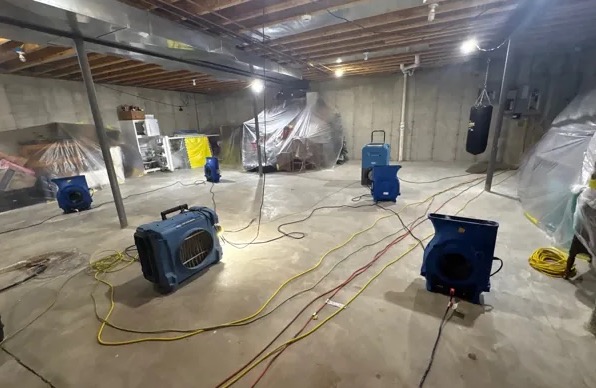
After pumping, air movers and dehumidifiers dry the walls, framing and slab. Readings are taken daily until every surface is back to normal.
Emergency Basement Flooding
Help is available any hour when water is rising in the basement from a storm, a sewer backup or a burst pipe.
Basement Wall Drying
Opening the bottom of finished walls lets air reach the studs and sill plate, which otherwise stay wet behind the drywall.
Basement Water Pump Out
Pumping starts once power to the basement is safe. Deep water goes first, then extractors handle the thin layer left on the floor.
Indicators You Need Professional Water Removal
Sump Pump Failure or Overflow
A sump pit that is full, overflowing or has a pump that will not start means water is about to spread.
Standing Water in Basement
Standing water anywhere on the basement floor needs to be pumped out before it soaks the walls.
Mold or Mildew
Dark spots on drywall, framing or stored items mean the area has stayed wet for days.
Wet or Damp Basement Walls
Basement walls that look dark, feel damp or show tide lines are taking on or holding water.
How Basement Water Removal Works in Belleville
Step 1: Emergency Water Extraction
Power is made safe, then pumps and extractors remove standing water from the basement floor.
Step 2: Detailed Moisture Inspection
Meters map wet walls, framing and slab areas, including behind finished walls and under flooring.
Step 3: Drying and Dehumidification
Air movers and large dehumidifiers run continuously, with readings checked every day.
Step 4: Final Verification and Monitoring
Readings are compared to dry areas, and equipment is removed only when the basement tests dry.
Why Basements Flood in Belleville
Heavy Rainfall and Storm Flooding
Heavy rain saturates the soil and pushes water through walls, cracks and the floor joint.
Foundation Cracks and Seepage
Cracks in foundation walls and the slab let groundwater seep in during wet weather.
High Water Table and Hydrostatic Pressure
A high water table presses groundwater against the slab and walls, forcing it inside.
Sump Pump Malfunction or Power Loss
A sump pump that fails mechanically or loses power during a storm lets groundwater rise.
Both Residential & Commercial Basement Water Removal
Residential Basement Water Removal
In homes, a wet basement often means damaged carpet, drywall and stored belongings, plus a furnace or water heater sitting in water. Water is pumped out and the space dried.
Commercial Basement Water Removal
In commercial buildings, basements often house mechanical rooms and storage. Water is removed quickly so systems can be checked and restarted safely.
When to Hire Local Pros for Basement Water Removal
Checking appliance hoses and extending downspouts away from the house are good DIY steps before storm season. Once the basement floods, call (973) 846-1705 for help.
Factors Affecting Basement Water Removal Cost
The cost of basement water removal in Belleville depends on how deep the water is, what type of water it is and how much finished material has to come out.
Basement Square Footage
Larger basements need more extraction, more drying equipment and more days of drying.
Water Depth and Volume
Deeper water takes more pumping time and usually means more materials got wet.
Access and Complexity
Narrow stairs, low ceilings and crowded storage areas make the work slower and longer.
Does Insurance Cover Basement Water Removal?
Photos, moisture readings and drying logs from local water damage pros help support an insurance claim for basement water damage in Belleville.
Benefits of Hiring Local Pros for Basement Water Removal in Belleville
Methodical Water Removal Process
Water is removed in a set order: pump-out, extraction, removal of soaked materials, then drying.
Industry Drying Standards
Water removal and drying follow industry water damage standards, with readings at every visit.
Detailed Damage Documentation
Photos, readings and drying logs are kept to support your insurance claim.
Round-the-Clock Basement Water Removal for Belleville
The faster a basement is pumped out, the more can be saved. Call (973) 846-1705 for basement water removal in Belleville as soon as you see water.
Call Now (973) 846-1705Basement Water Removal Serving Belleville and Surroundings
Help with basement water removal is also available in communities near Belleville, including North Arlington, Kearny and Lyndhurst, for flooded basements and sewer backups.
- Basement Water Removal in North Arlington
- Basement Water Removal in Kearny
- Basement Water Removal in Lyndhurst
- Basement Water Removal in Nutley
- Basement Water Removal in Bloomfield
- Basement Water Removal in East Orange
- Basement Water Removal in Montclair
- Basement Water Removal in Harrison
- Emergency Damage Restoration in 07109
- Storm Damage Restoration in 07109
- Water Damage Restoration in 07109
- Water Extraction Service in 07109
- Water Leak Detection in 07109
- Water Removal Service in 07109
Answers to Top Basement Water Removal Queries
Can I dry my basement myself with fans?
Fans help with surface water, but walls and concrete need dehumidifiers and readings to dry fully.
How is basement wall drying done?
Wet drywall is cut back, insulation removed and directed airflow and dehumidifiers dry the studs and masonry.
What equipment is used for basement water extraction?
Submersible pumps, extractors, wet vacs, air movers, large dehumidifiers and moisture meters to confirm drying.
How does a basement moisture inspection work?
Moisture meters and thermal cameras check walls, floors and the slab, including behind finished walls and under flooring.
What is the difference between a pump out and extraction?
A pump out removes deep standing water. Extraction pulls the remaining water from carpet, pad and floors.